Why Concrete Patios Sink Over Time (and How Leveling Helps)
Is your concrete patio sinking away from your house? Learn why patios settle, what leveling can do, and how to prevent more damage to your home and foundation.
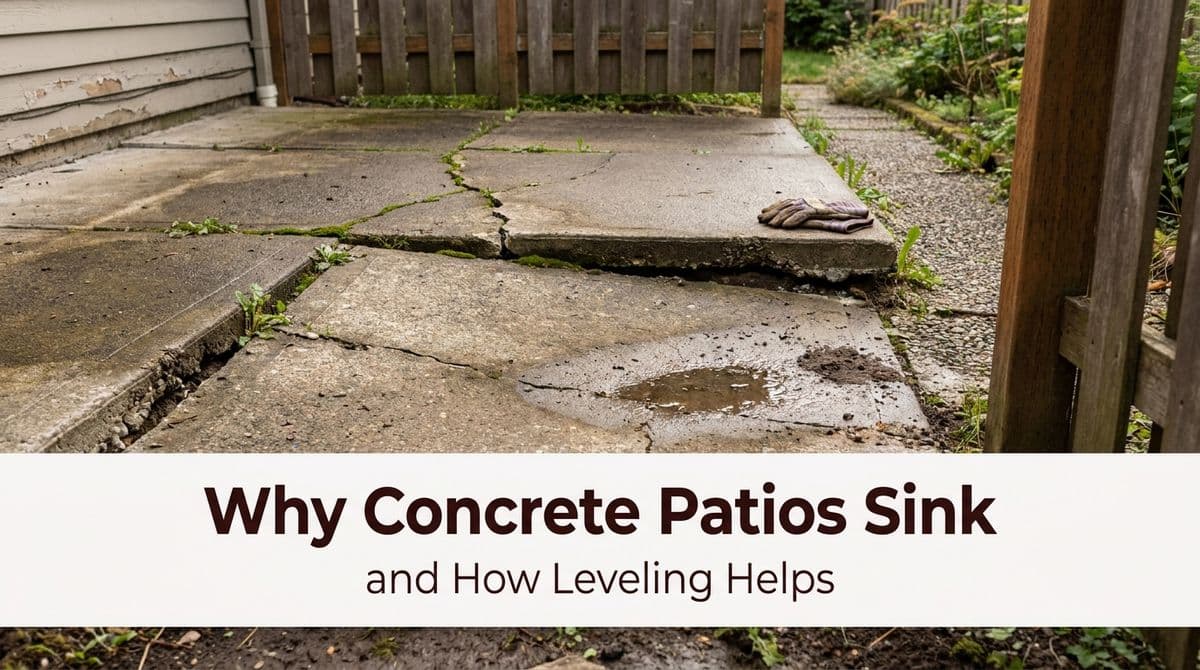
Why This Patio Sank So Much in Just 16 Years
We recently got a call from a homeowner — let’s call her Lisa — who wanted an estimate to have her concrete patio leveled. She told us they built the home about 16 years ago, and over time the back patio had sunk along the house by about 3 to 4 inches. It had dropped so far that she could actually see the rebar exposed right where the patio meets the house wall.
Her patio is about 14 feet by 18 feet, but the worst settling was in a strip about 7 feet by 18 feet along the foundation. That’s a pretty common pattern: the slab pulls away from the house, water starts running toward the foundation, and small issues gradually become big, expensive ones.
We set up a time to come out, take measurements, and give her a free estimate. In the meantime, we walked her through why patios sink like this in the first place, and what leveling can do to stop the damage from getting worse.
Main Reasons Concrete Patios Sink Over Time
When we see a patio like Lisa’s that has sunk several inches, it usually comes down to a few familiar culprits working together.
Poor Compaction During Original Construction
Lisa mentioned something we hear all the time: “I’m pretty sure they didn’t really tamp around the house real good when we built.” That’s usually right on the money. After a house is built, the soil that was disturbed around the foundation is often not compacted properly before the patio is poured.
Here’s what that means for the slab:
- Loose backfill slowly compresses under the weight of the concrete.
- Voids (air pockets) form under the slab as the soil settles.
- The concrete loses support along the edge by the house first, so it sinks there.
In Lisa’s case, 16 years was enough time for the soil to finish “doing its settling,” and the patio showed the result.
Water and Drainage Issues
Water is the other big factor. If water tends to sit near the house after a rain or snowmelt, it can soften the soil under the patio and speed up settlement.
We often find:
- Downspouts dumping water right next to the patio
- Yards sloping toward the house instead of away
- Gaps between the patio and foundation where water seeps down
Over time, water washes away fine particles in the soil, leaving voids under the concrete. The slab then sinks into those voids, sometimes cracking or tilting toward the home.
Freeze–Thaw Cycles and Regional Soil Conditions
In our area, freeze–thaw cycles are constantly moving the ground. Moist soil expands when it freezes and contracts when it thaws. If the base under your patio isn’t uniform and well-drained, some sections move more than others, which leads to uneven settlement.
Clay-heavy soils are especially prone to this. They swell when wet and shrink when dry, which can lift and drop the concrete repeatedly until the weakest sections finally settle permanently.
Why a Sinking Patio Is More Than Just an Eyesore
Lisa originally called because she was tired of looking at the drop along the house, but that wasn’t the only concern. When a patio has sunk 3 to 4 inches, we start thinking about safety and long-term damage.
- Trip hazards: Any change of more than about 1/2 inch can be a tripping risk, especially for kids, older family members, and guests.
- Water toward the foundation: A slab that tilts toward the house can funnel water right up against the foundation, which can lead to seepage or basement issues over time.
- Exposed rebar: When you can see rebar, the concrete has moved a lot, and the metal can rust and stain or even weaken the slab edge.
The good news we shared with Lisa: once a slab has finished most of its initial settling, leveling it is usually a very effective, long-lasting fix.
How Concrete Leveling Fixes the Problem
Our goal with patio leveling is simple: restore support underneath the slab and bring it back up to the right height and slope. There are a couple of methods, and we explain the options on-site, but the basic idea is the same.
What We Do During a Leveling Appointment
On Lisa’s scheduled estimate visit, here’s what we planned to do — and what you can expect if we come to your home:
- Inspection and measurements: We check how far the patio has dropped, where the lowest points are, and whether any cracks or drainage issues are present.
- Check drainage and grading: We look at where water is going now and where it should go once the slab is level again.
- Discuss options and pricing: We walk through the leveling method we recommend, how long it will take, and provide a written estimate.
On the actual repair day, the process usually looks like this:
- Drill small holes in the slab in strategic locations.
- Inject a lifting material (like a specialized grout or foam) underneath the patio to fill voids and gently raise the slab.
- Monitor the lift carefully to get the patio back to the correct height and slope away from the house.
- Patch the drill holes and clean up the work area.
Most patio leveling projects are completed in a single day, and many homeowners can use the space again within hours, depending on the materials used.
How to Keep Your Leveled Patio in Good Shape
After we level a patio like Lisa’s, we also talk through a few simple maintenance steps that help protect that investment.
Manage Water Around the Patio
Water control is huge. We usually recommend that homeowners:
- Extend downspouts at least 4–6 feet away from the patio and foundation.
- Make sure the soil or landscaping slopes gently away from the house.
- Seal any gap between the patio and foundation with an appropriate sealant to keep water from running straight down the joint.
Seal and Inspect the Concrete
While sealing doesn’t stop settlement, it does protect the surface from water and freeze–thaw damage. Every couple of years, it helps to:
- Inspect for new cracks or widening joints.
- Reseal the slab surface if needed, especially before winter.
- Fill small cracks early so they don’t grow.
Watch for Early Signs of Movement
Most leveled patios stay stable for many years when the underlying causes are addressed. Still, it is smart to keep an eye out for:
- New low spots where water puddles after a rain.
- Fresh gaps opening between the patio and the house.
- Doors nearby sticking or rubbing differently than before.
Catching these small changes early can make any future adjustments simpler and less expensive.
Thinking About Leveling Your Own Sinking Patio?
If your patio looks anything like Lisa’s — dropped a few inches along the house, maybe even showing rebar or creating a trip edge — it is worth having it checked before the problem gets worse. Leveling is often far more affordable and less disruptive than tearing out and repouring the entire slab.
During an estimate visit, we walk you through what’s happening under your patio, what we recommend, and what you can do afterward to keep the concrete looking good and draining properly. Our goal is to help you enjoy that outdoor space again, without worrying about water at your foundation or someone tripping on the way to the grill.
Whether your patio is 5 years old or 25, if it is sinking, we are happy to come out, take a look, and help you decide on the best path forward.